
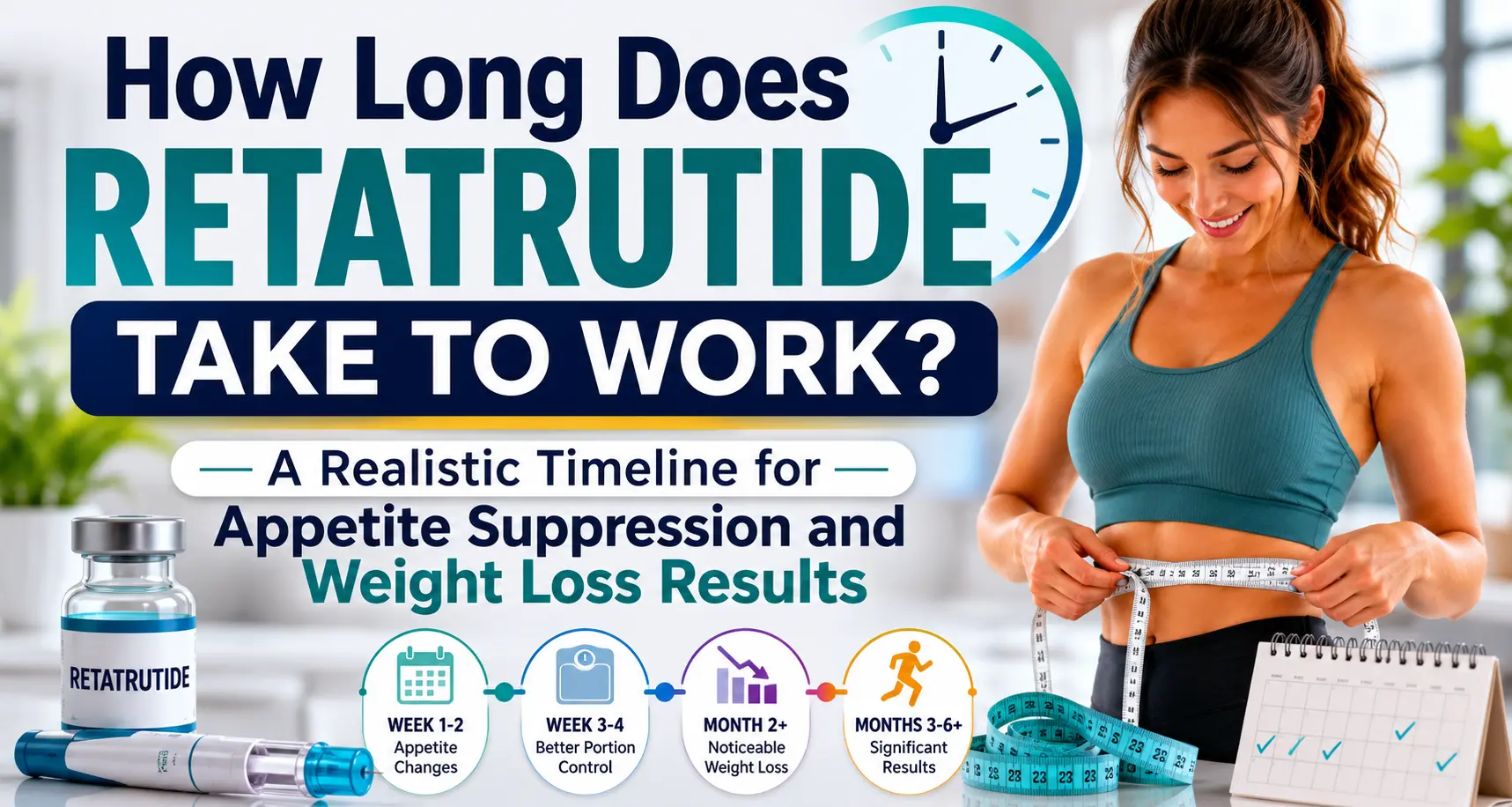
If you’re considering retatrutide for weight loss, one of the first questions you’re likely asking is: how long does retatrutide take to work?
The short answer is that many people begin noticing reduced appetite and fewer food cravings within the first one to two weeks.
Weight loss often becomes noticeable within four to eight weeks, while the most significant results typically occur after several months of consistent treatment.
However, there isn’t a single timeline that applies to everyone.
Your starting weight, eating habits, activity level, metabolism, dosage progression, and overall health can all influence how quickly you notice changes.
Understanding what to expect at each stage can help you set realistic expectations and recognize signs of progress, even before the scale begins to move.
SEE HOW RETATRUTIDE CAN HELP YOUR WEIGHT LOSS JOURNEY
The Short Answer: When Does Retatrutide Start Working?
Most people experience the effects of retatrutide in stages.
| Timeline | What You May Notice |
| Week 1-2 | Reduced appetite and increased fullness |
| Week 3-4 | Better portion control and fewer cravings |
| Month 2 | Consistent weight loss becomes noticeable |
| Months 3-6 | Significant fat loss and body composition changes |
| Months 6-12+ | Continued weight reduction and long-term results |
One of the most important things to understand is that appetite suppression often happens before noticeable weight loss.
Many people feel the medication working well before they see major changes on the scale.
How Does Retatrutide Work?
Retatrutide works by targeting three hormone pathways involved in appetite regulation, blood sugar control, and energy balance.
These pathways help:
- Reduce hunger signals
- Increase feelings of fullness
- Slow stomach emptying
- Improve blood sugar regulation
- Support long-term fat loss
Because retatrutide affects multiple pathways related to weight management, its effects often build gradually over time.
Instead of creating rapid short-term changes, it helps establish conditions that make sustainable weight loss easier to achieve.
Retatrutide Timeline: What to Expect Week by Week
If you’re searching for a retatrutide weight loss timeline, it’s helpful to understand that results typically happen in phases rather than all at once.
Weeks 1-2: Appetite Changes Begin
For many individuals, the first signs that retatrutide is working appear within the first two weeks.
Common experiences include:
- Feeling full sooner during meals
- Reduced hunger between meals
- Less interest in snacking
- Fewer cravings for sweets or highly processed foods
Some people notice these changes within days, while others may require a few weeks before appetite suppression becomes obvious.
Weight loss during this stage is often modest.
Some individuals lose several pounds, while others experience little change on the scale initially.
Weeks 3-4: Better Portion Control
By the end of the first month, appetite regulation often becomes more noticeable.
Many people report:
- Eating smaller portions naturally
- Feeling satisfied with less food
- Reduced emotional eating
- Improved control around snacks and desserts
This is often when people begin realizing that healthy eating habits feel easier to maintain than before.
Weeks 5-8: Weight Loss Becomes More Noticeable
For many individuals, the second month is when measurable weight loss becomes more consistent.
You may begin noticing:
- Looser-fitting clothing
- Visible reductions in waist circumference
- Steady weight loss from week to week
- Increased motivation due to progress
If you’ve been wondering how fast retatrutide works, this is often the stage where many users begin seeing meaningful results.
Months 3-6: Significant Fat Loss
Between months three and six, many people experience some of the most dramatic improvements.
Potential benefits may include:
- Significant reductions in body weight
- Improved body composition
- Better mobility and physical function
- Increased energy levels
- Greater confidence
For some individuals, this is when family and friends begin noticing visible changes.
Months 6-12 and Beyond: Long-Term Results
Weight loss often continues beyond six months.
Rather than reaching a plateau after a few weeks, many individuals continue experiencing improvements in appetite control and body weight over time.
Long-term benefits may include:
- Continued fat loss
- Improved metabolic health
- Better long-term weight maintenance
- Increased confidence and quality of life
What Do Clinical Studies Show?
Research on retatrutide has demonstrated substantial weight-loss potential over extended treatment periods.
In clinical trials, participants experienced progressive weight loss over many months, with results continuing to improve as treatment continued.
One important takeaway is that weight loss didn’t happen all at once.
Participants generally experienced gradual progress that accumulated over time, which is why patience and consistency are so important.
The strongest results were typically seen after many months of treatment rather than during the first few weeks.
Why Does Retatrutide Take Time to Work?
Many people expect immediate results when starting a weight-loss medication.
However, there are several reasons why retatrutide works gradually.
Dose Escalation
Many treatment plans begin with lower doses that increase over time.
This approach helps improve tolerability while allowing the body to adjust.
As dosage levels increase, appetite suppression and weight-loss effects often become more pronounced.
Appetite Changes Come First
One of the earliest effects of retatrutide is reduced hunger.
However, consuming fewer calories today does not immediately translate into visible fat loss tomorrow.
The body requires time to create and maintain a calorie deficit before significant weight loss occurs.
Sustainable Fat Loss Takes Time
Unlike rapid weight-loss methods that often result in temporary changes, retatrutide supports gradual fat loss that may be easier to maintain long term.
Signs Retatrutide Is Working Before Weight Loss Happens
Many people become concerned when they don’t immediately see changes on the scale.
Fortunately, weight isn’t the only indicator of progress.
Reduced Hunger
One of the most common early signs is feeling less hungry throughout the day.
Smaller Portions Feel Satisfying
You may find yourself naturally eating less without feeling deprived.
Fewer Cravings
Many people report reduced cravings for sweets, fast food, and processed snacks.
Better Control Around Food
Food may occupy less mental space, making healthy choices easier.
Improved Blood Sugar Stability
Some individuals notice fewer energy crashes and more stable energy levels throughout the day.
Increased Confidence
Seeing improvements in eating habits often helps people feel more optimistic and motivated about their weight-loss journey.
Factors That Affect How Fast Retatrutide Works
Not everyone experiences the same results at the same pace.
Several factors can influence your timeline.
Starting Weight
Individuals with higher starting body weights may experience larger initial weight changes.
Nutrition Habits
Retatrutide can help reduce appetite, but food choices still play a major role in overall success.
Physical Activity
Exercise supports fat loss, improves metabolic health, and helps preserve muscle mass during weight loss.
Sleep Quality
Poor sleep can increase hunger hormones and make weight management more challenging.
Stress Levels
Chronic stress can contribute to overeating, cravings, and slower progress.
Dosage Progression
People who are still on introductory doses may not experience the full effects until they reach higher treatment levels.
Why Am I Not Losing Weight on Retatrutide?
If you aren’t seeing the results you expected, several explanations may exist.
It’s Too Early
Many people expect dramatic changes during the first few weeks, but meaningful weight loss often requires more time.
You’re Still on a Starter Dose
Lower doses are often intended to help your body adjust before stronger appetite-suppressing effects occur.
Water Retention Is Masking Progress
Temporary changes in water balance can hide fat loss on the scale.
Lifestyle Factors Are Slowing Results
Nutrition, exercise, sleep, and stress management continue to influence weight loss outcomes.
Weight Loss Isn’t Linear
Many people experience periods of slower progress followed by more noticeable results later.
Retatrutide vs Tirzepatide: Which Works Faster?
Both retatrutide and tirzepatide can support significant appetite suppression and weight loss.
Some individuals report early appetite changes with either medication, while others notice more gradual improvements.
Because everyone responds differently, it’s difficult to predict which option will work faster for a particular person.
More importantly, long-term consistency and overall effectiveness are often more valuable than how quickly initial results appear.
Retatrutide vs Semaglutide Timeline
Retatrutide and semaglutide both support weight loss through appetite regulation, but they work through different mechanisms.
Both medications typically require several weeks before significant weight loss becomes noticeable and several months before major results occur.
The best choice depends on individual health factors, weight-loss goals, and guidance from a healthcare provider.
When Should You Expect Significant Weight Loss?
For many individuals, a realistic timeline looks something like this:
- Weeks 1-2: Appetite changes begin
- Weeks 3-4: Better portion control develops
- Months 2-3: Noticeable weight loss often occurs
- Months 3-6: Significant progress becomes visible
- Months 6-12+: Long-term goals become increasingly achievable
Understanding this timeline can help reduce frustration and encourage patience during the process.
SEE HOW RETATRUTIDE CAN HELP YOU
Final Thoughts: How Long Does Retatrutide Take to Work
So, how long does retatrutide take to work?
Many people begin noticing reduced hunger, increased fullness, and fewer cravings within the first one to two weeks.
Weight loss often becomes noticeable within four to eight weeks, while the most significant changes typically occur after several months of consistent treatment.
Although every person’s experience is different, the key is understanding that retatrutide works gradually.
Appetite changes usually come first, followed by steady weight loss over time.
Combined with healthy nutrition, regular physical activity, quality sleep, and ongoing medical guidance, retatrutide may help support meaningful and sustainable weight-loss results.
FAQs: How Long Does Retatrutide Take to Work
Does retatrutide work right away?
Retatrutide begins affecting appetite-regulating hormones shortly after treatment starts, but most people do not experience dramatic results immediately. Many individuals notice reduced hunger and increased fullness within the first one to two weeks, while noticeable weight loss often takes several weeks longer.
How long before you start losing weight on retatrutide?
Many people begin losing weight within four to eight weeks of starting retatrutide. Appetite changes often occur first, followed by gradual weight loss as calorie intake decreases and the body begins utilizing stored fat for energy.
Does retatrutide burn fat?
Retatrutide does not directly burn fat in the same way a stimulant might increase calorie expenditure. Instead, it helps reduce appetite, improve fullness, and support a calorie deficit, which encourages the body to use stored fat for energy over time.
Does retatrutide give you energy?
Retatrutide is not considered an energy-boosting medication. However, some people report improved energy levels as they lose weight, eat healthier foods, experience more stable blood sugar levels, and become more physically active. Others may not notice a significant change in energy levels during treatment.
What are the benefits of retatrutide vs tirzepatide?
Retatrutide and tirzepatide both support weight loss by helping regulate appetite and improving metabolic function. However, retatrutide targets three hormone pathways involved in weight management, while tirzepatide targets two. This additional mechanism may contribute to greater weight-loss potential in some individuals based on clinical research. Both medications can help reduce hunger, improve feelings of fullness, and support long-term weight loss, but individual results, side effects, and treatment suitability can vary. A healthcare provider can help determine which option may be most appropriate based on your health history and weight-loss goals.